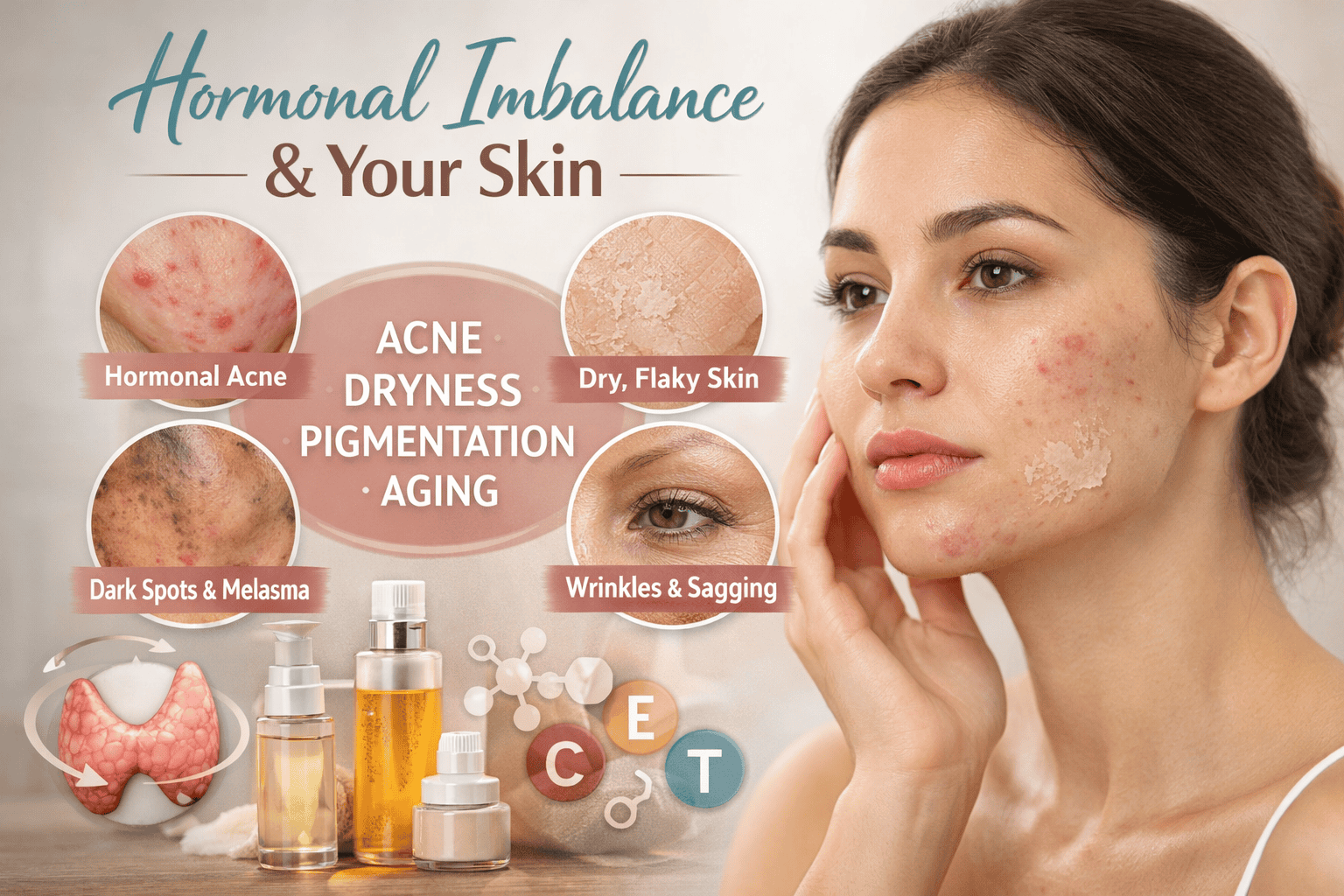
Your skin often reflects what is happening inside your body. If you are dealing with stubborn acne, unexplained dryness, sudden pigmentation, or premature aging, the issue may not be your skincare routine—it may be your hormones.
Let’s explore how hormonal imbalance affects the skin and what you can do to restore healthy, glowing skin.
How Hormones Influence Skin Health
Hormones regulate oil production, skin hydration, collagen levels, inflammation, and cell turnover. The key hormones that affect skin health include estrogen, progesterone, testosterone, cortisol, insulin, and thyroid hormones.
When these hormones are balanced, the skin tends to be clear, smooth, firm, and well-hydrated. When they are not, a variety of skin concerns can appear.
Common Skin Problems Caused by Hormonal Imbalance
Hormonal imbalance can affect the skin in different ways, depending on which hormones are disrupted.
- Hormonal Acne
Hormonal acne is one of the most common skin issues linked to hormonal imbalance. It often appears along the jawline, chin, cheeks, and neck and tends to worsen around the menstrual cycle.
Excess androgens (male hormones present in women) increase oil production, clog pores, and trigger inflammation, leading to persistent breakouts that may not respond to regular skincare products.
- Dry, Dull, or Dehydrated Skin
Low estrogen levels reduce the skin’s ability to retain moisture and maintain elasticity. This often leads to dry, flaky, dull-looking skin, especially during menopause or postpartum periods.
Estrogen also supports collagen production, so declining levels can make the skin appear thinner and less radiant.
- Hyperpigmentation and Uneven Skin Tone
Hormonal fluctuations can trigger excess melanin production, leading to dark patches on the skin, commonly known as melasma or hormonal pigmentation. This is often seen during pregnancy, with birth control use, or during periods of significant hormonal change.
Sun exposure can worsen hormonal pigmentation, making protection even more important.
- Premature Aging and Loss of Elasticity
Hormonal imbalance can accelerate signs of aging. Reduced estrogen and increased cortisol levels break down collagen and elastin, leading to fine lines, wrinkles, and sagging skin.
Chronic stress, in particular, raises cortisol levels, which contributes to inflammation and speeds up skin aging.
- Increased Skin Sensitivity and Inflammation
Imbalanced hormones can weaken the skin barrier, making the skin more reactive and sensitive. This may result in redness, itching, eczema flare-ups, or worsening of conditions such as rosacea.
Hormonal Conditions That Commonly Affect the Skin
Certain hormonal disorders are closely linked to skin changes, including:
- Polycystic Ovary Syndrome (PCOS), which often causes acne, oily skin, and excess facial hair
- Thyroid disorders, which can lead to dry, pale, or rough skin
- Insulin resistance, which may cause darkened skin folds (acanthosis nigricans)
Recognizing these patterns can help guide proper diagnosis and treatment.
How to Support Hormonal Balance for Healthier Skin
Healthy skin starts from within. While skincare products are important, addressing hormonal health is key to long-term results.
Some effective ways to support hormonal balance and improve skin health include:
- Eating a balanced diet rich in antioxidants, healthy fats, and whole foods
- Managing stress to reduce cortisol levels
- Getting quality sleep to support skin repair and hormone regulation
- Staying physically active to improve insulin sensitivity
- Using gentle, hormone-friendly skincare products
- Seeking medical advice for persistent or severe skin issues
In some cases, hormonal testing and medical treatment may be necessary.
Skincare Call to Action
If you have been treating your skin from the outside with little or no results, it may be time to look deeper. Skincare works best when it supports what is happening inside your body.
Start by paying attention to your skin’s patterns—when breakouts appear, when dryness worsens, or when pigmentation becomes more noticeable. These changes can offer important clues about your hormonal health.
Support your skin with gentle, hormone-friendly skincare products, a nourishing diet, proper hydration, stress management, and adequate sleep. If skin concerns persist, consider speaking with a healthcare or skincare professional who understands the connection between hormones and skin health.
Your skin deserves more than quick fixes. When you care for your hormones, you care for your skin—naturally, holistically, and effectively.